


Trickle Vents FAQs
To quickly find the answers to commonly raised questions about trickle vents, please select from the following list of FAQs.
If you can’t find the answer you need, feel free to call us on 01392 444233 or email help@aspect-windows.com.
What is a face-mounted trickle vent?
A face-mounted trickle vent is a ventilation device fixed to the face of an aluminium window or door frame, allowing a controlled amount of background airflow into a property without needing to open the window.
Why are trickle vents required?
Trickle vents are typically required to:
- Comply with Building Regulations (Approved Document F – Ventilation)
• Provide continuous background ventilation
• Reduce condensation and improve indoor air quality
• Prevent mould growth in modern airtight buildings
Should I use face-mounted vents instead of integrated vents?
Face-mounted vents are commonly used when:
• The aluminium profile does not allow integrated vents
• Retrofitting is required
• Structural integrity of the frame must not be compromised
• Larger airflow requirements are needed
They offer flexibility and are often the only compliant solution on slim aluminium systems.
Are face-mounted trickle vents compliant with Building Regulations?
Yes, when correctly specified and installed, face-mounted vents from manufacturers such as:
• RW Simon
• Brookvent
• Greenwood
These can all meet the required Equivalent Area (EA) airflow values under Approved Document F.
Will they affect the appearance of my windows?
Face-mounted vents are visible externally and internally, unlike concealed options.
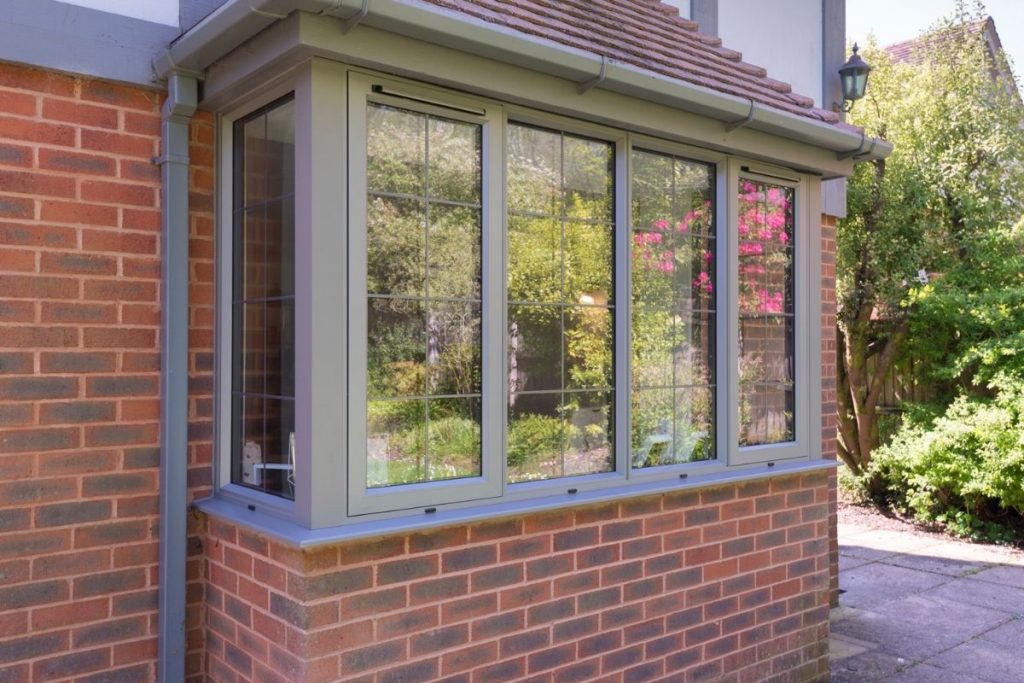
However, modern designs are low-profile and can be colour-matched. Powder-coated finishes can match aluminium frames.
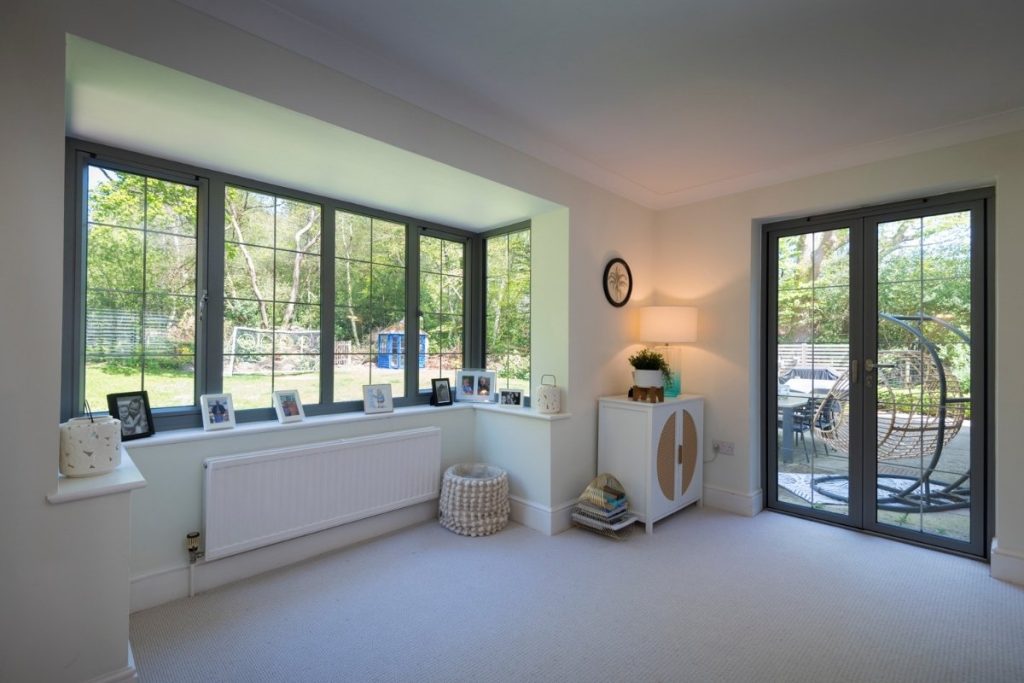
When carefully positioned, it is possible to minimise the visual impact.
Can the vents be colour-matched?
Yes. Most manufacturers offer a range of standard colours (white, black and grey). It is also possible to have RAL colour-matched vents to suit your aluminium frames.
Do trickle vents let in noise or draughts?
Installing a high-quality vent will minimise draughts through controllable openings. They include internal baffles to reduce noise transfer.
However, due to their purpose, minimal airflow and sound transfer are unavoidable.
Can the airflow be controlled or closed?
Yes, face-mounted trickle vents typically include manual open and close controls, as well as adjustable airflow settings.
However, it is important to note that regulations may require them to be capable of being left open.
Are they suitable for doors as well as windows?
Yes, face-mounted vents can be installed on the following, where they are required to meet ventilation regulations:
• Aluminium windows
• Sliding doors
• Bi-fold doors
• Fixed frames
Can I have trickle vents in the Ultraline Slim Sliding Door?
Due to the slim sight lines of the Ultraline Slim Sliding Door, it is not possible to have trickle vents.
However, it is possible to lock the door in a semi-open position of 100mm, to ventilate the room without compromising on security.
Do trickle vents affect weather performance?
When trickle vents are installed correctly, they are designed to remain weathertight. External canopies can prevent water ingress without compromising the performance of the system.
Can trickle vents be added after installation?
Yes. One of the major advantages of face-mounted vents is that they can be retrofitted to existing aluminium frames. They can also be installed without replacing the window or door.
What size trickle vent do I need?
This depends on:
• Room type (Is it a habitable room, or a kitchen or a bedroom?)
• Floor area
• Number of windows/doors
Your installer will calculate the required Equivalent Area (EA) to ensure compliance.
Are there different brands available?
Yes, commonly used manufacturers include:
- RW Simon
• Brookvent
• Greenwood
All offer a range of sizes, airflow capacities, and finishes suitable for aluminium systems.
Do trickle vents require maintenance?
Trickle vents only require minimal maintenance. They will benefit from occasional cleaning to remove dust and debris, to ensure that openings are not blocked.
Will I need trickle vents if I have mechanical ventilation?
Not always. If your property has systems such as MVHR (Mechanical Ventilation with Heat Recovery), then trickle vents may not be required. This should be confirmed at the design stage.
Can I have integrated trickle vents?
Yes, it is possible to have an integrated trickle vent. The RW Simon Airstrip 19000 is an integrated trickle vent that sits within the glazing zone, rather than being cut into the aluminium frame.
The Airstrip 19000 is installed between the frame head and glass unit for a cleaner aesthetic and improved performance.
Find more information below on the RW Simon 400 and the RW Simon 19000.
RW Simon Airstrip 400 (0 downloads ) RW Simon Airstrip 19000 (0 downloads )Are integrated trickle vents better than face-mounted trickle vents?
Yes, integrated trickle vents can be considered the premium of the two options when it comes to trickle vents.
Being integrated, they deliver a much cleaner, more discreet appearance with no visible plastic components. Perfect for those seeking an incredibly sleek, modern aesthetic.
They also avoid the need to cut into the frame, helping maintain structural integrity and improving thermal performance by reducing cold bridging and condensation risk. In addition, integrated vents typically achieve higher airflow in shorter lengths, offer better acoustic performance, and provide stronger resistance to wind-driven rain.
Face-mounted vents can still be useful in retrofit situations, but for new installations, particularly slimline or premium systems, integrated vents offer clear advantages in performance, aesthetics, and overall quality.

Book a Showroom Visit
Our purpose-built showroom has an extensive, innovative range of glazing products. Book a visit with one of our experts here.

Make an Enquiry
Looking for more information? Wanting to discuss your requirements? Get in touch.

Inspiration
Get some inspiration for your home from some of the projects Aspect Windows have been working on recently.