30
Jan

Fading furniture is a phenomenon that we’ve all had to battle at one stage.
Whether that’s a cherished family photo frame, a sideboard, a kitchen table or a sofa, the imperfections caused by direct sunlight onto our interior furnishings can often be irreversible.
Your possessions and valuables could all be saved by upgrading your glazing.
Why does this happen? And what can you do to prevent this in the future? We’ve compiled some helpful to help you if you have, or are worried about experiencing fading furniture.
Furniture left in direct sunlight can fade in colour over time due to the ultraviolet rays within sunlight.
This occurs because the sun’s UV rays break down the chemical bonds that form our furniture’s colours.
This is not a process that can happen overnight but over a longer period if left untreated, leading to discolouration and degradation in structural integrity.
Your room layout or desired style may make it difficult to avoid positioning your furniture in direct sunlight. If this is the case, there are some additional factors you could consider.
Choosing laminated glass is an excellent option for homeowners looking to prevent any fading to furniture positioned in direct sunlight.
Laminated Glass is becoming an increasingly popular choice for commercial and residential properties as a result of its excellent performance.
The polyvinyl butyral interlayer within laminated glass absorbs UV radiation, protecting your furnishings from fading over time.
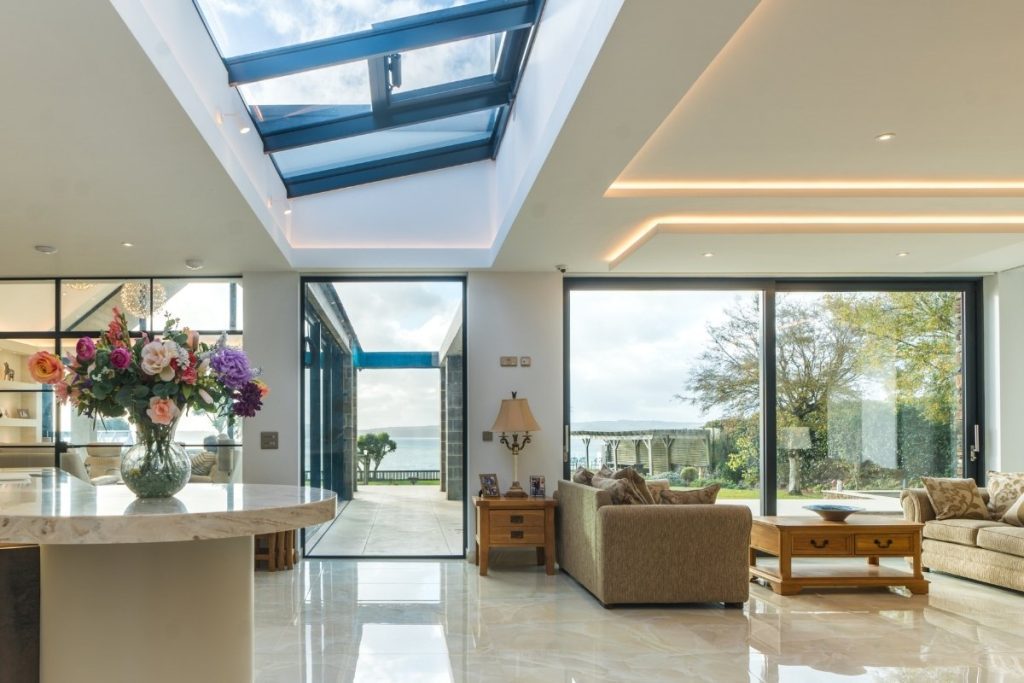
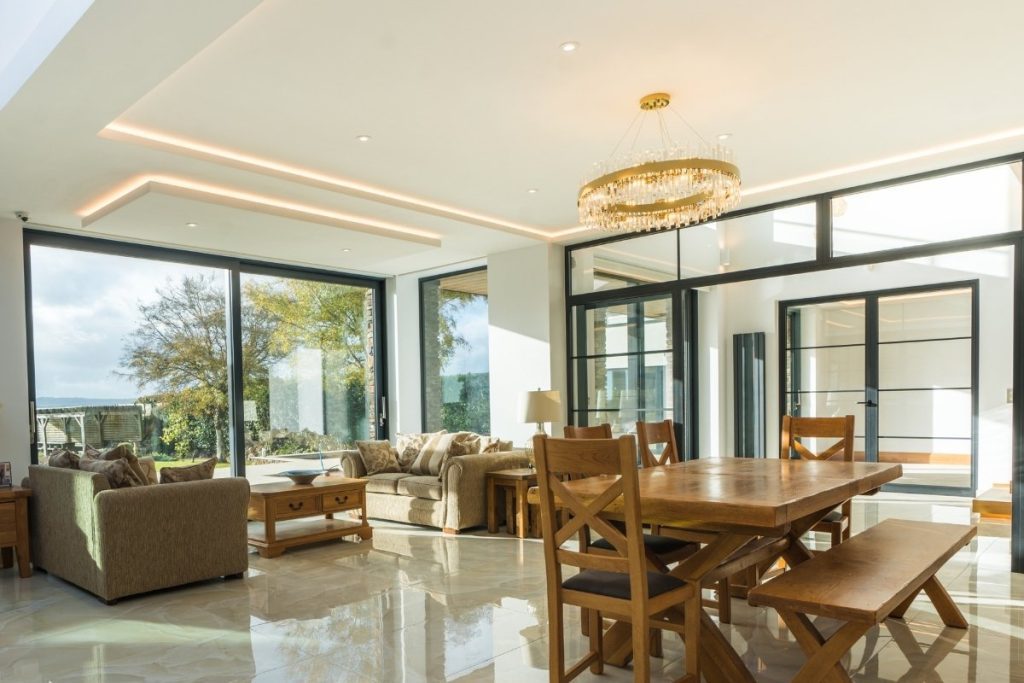
The images below show a recent Aspect Windows installation, where the customer wanted to maximise their coastal views with a breakfast/dining area at the rear of the property.
For the best coastal views, furniture had to be positioned near this Reynaers CP 130 Lift and Slide door. Eager to prevent their furniture from fading, they opted for laminated glass so they could enjoy the views without sacrificing their furniture.
Installing blinds or curtains to your windows can be another helpful method of limiting the amount of direct sunlight entering your room.
If this is the route you choose, be sure to carefully select the materials you use, as fading could still occur on whatever you install.
If you are looking for a short-term fix before changing any of your glazing, the simplest option could be to move some furniture around.
Moving furniture out of direct sunlight will prevent fading over time and can be the most cost-effective option if this doesn’t compromise your living space or room layout.
Beyond its UV protection, laminated glass comes with a host of benefits that make it a shrewd addition to your home.
Compared to traditional glass types, laminated glass can have superior acoustic performance as a result of the sheet thickness of the material.
The interlayer within laminated glass holds the glass together in the event of any breakage. This significantly reduces the possibility of injuries from glass shards and also makes it difficult to penetrate.
Laminated glass can be a wise choice in high-wind coastal locations. The additional strength and thickness of the laminated glass can prevent the glazing from wobbling in high winds.
If you would like to learn more about Aspect Windows’ glazing solutions and discover how we could support your next project, please don’t hesitate to book a showroom appointment or contact our team.
Back to News
Our purpose-built showroom has an extensive, innovative range of glazing products. Book a visit with one of our experts here.

Looking for more information? Wanting to discuss your requirements? Get in touch.

Get some inspiration for your home from some of the projects Aspect Windows have been working on recently.
© 2026 Aspect Windows (Western) Limited. All rights reserved. Registered in England and Wales. Company number 01938445.
Registered Address: 8 Apple Lane, Sowton 30 Trading Estate, Exeter, Devon, EX2 5GL. Web Design by Priority Pixels.
Terms & Conditions | Privacy & Cookie Policy | CE Marking


